In a country fighting for its very survival, rubbish is not the most pressing issue; yet, bearing in mind the catastrophic damage Russia has inflicted on Ukraine’s environment, let us at least minimise waste so as not to make matters worse
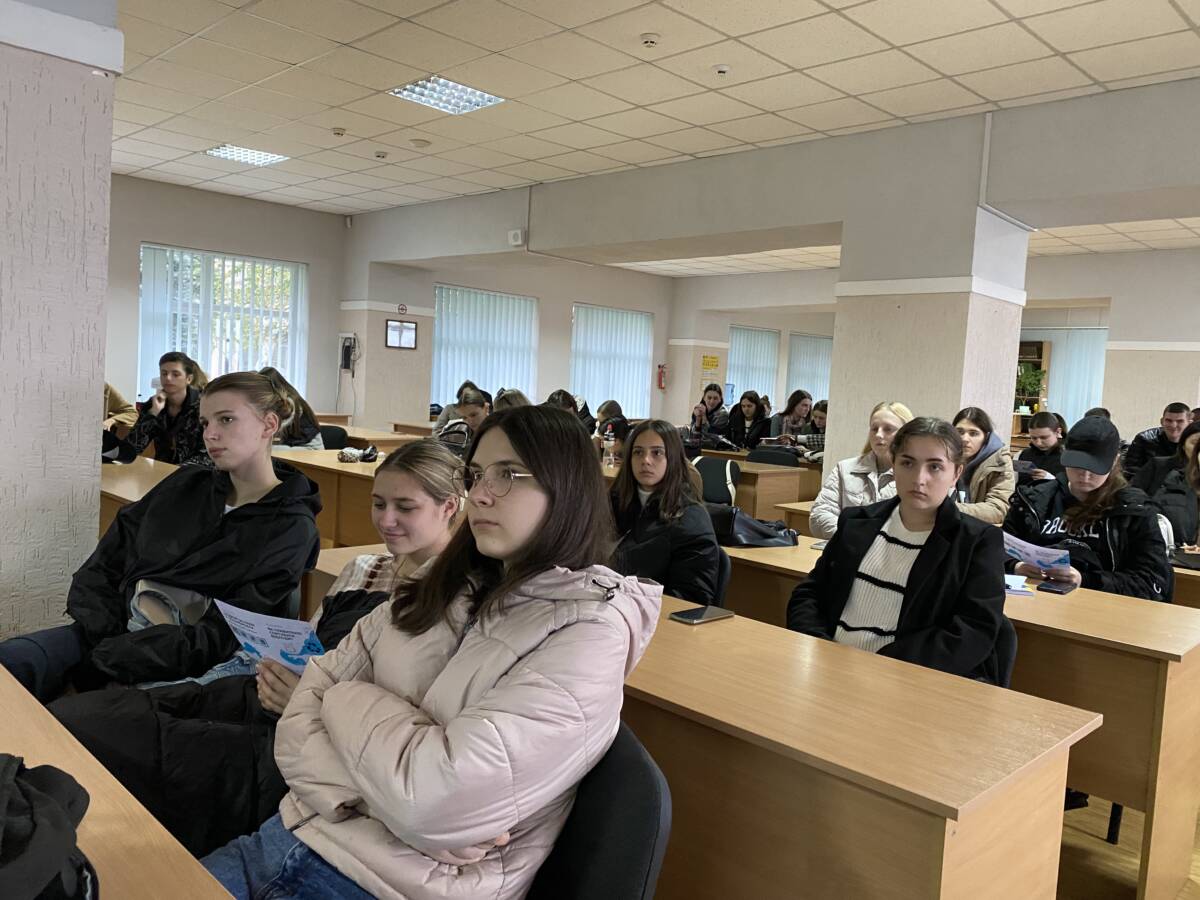
Uzhhorod University is actively involved in eco-activism: students take part in community clean-ups, and have recently been given the opportunity to sort waste on campus. To help first-year students of the Faculty of Economics understand the topics of conscious consumption and eco-awareness, Anna Sabadosh, director of the NGO ‘Green City’, visited the students to speak with them.
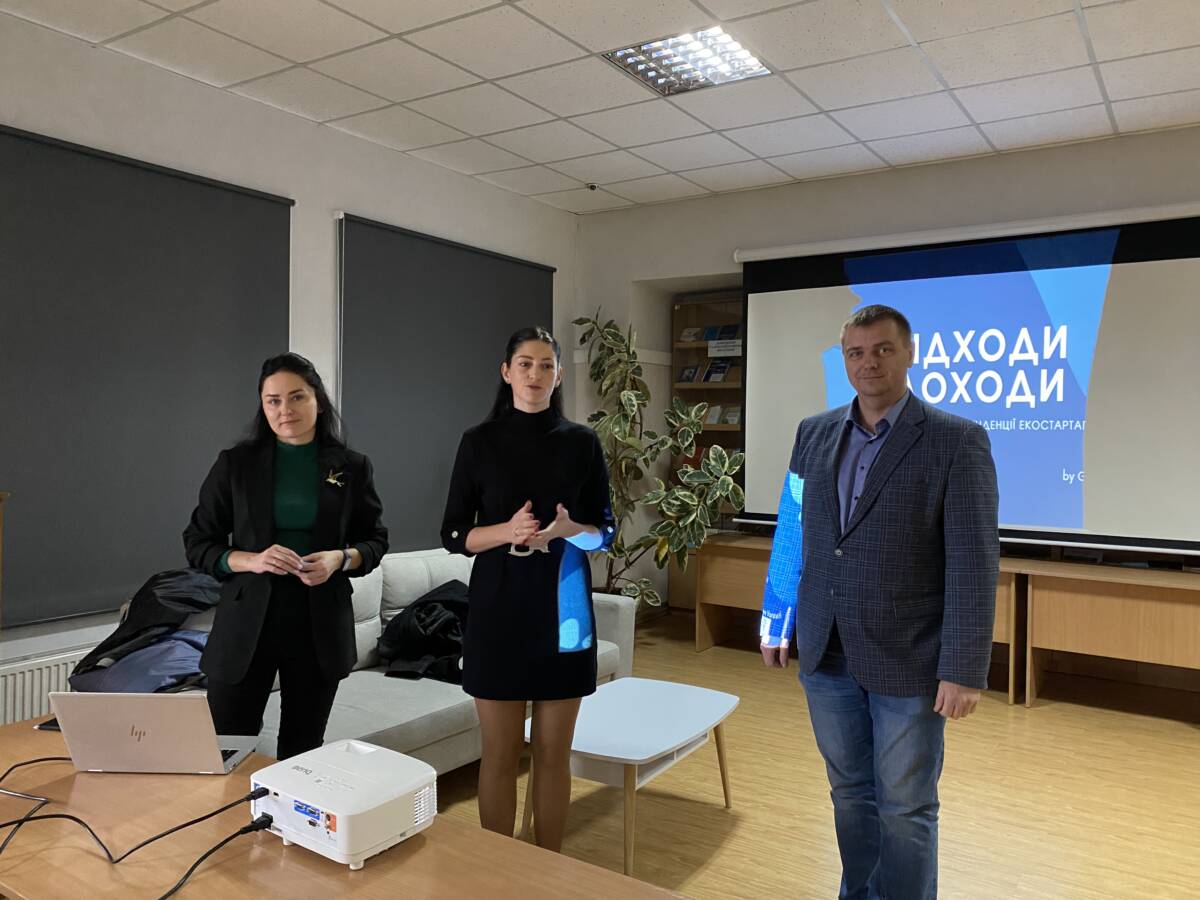
The meeting was opened by Vitaliy Serzhanov, Dean of the Faculty of Economics. He emphasised that it is important for today’s students to be environmentally conscious, and that economics students in particular should be aware that the fight for a clean environment and the recycling of secondary raw materials are also a source of funding.
Alona Almashiy, Director of the Centre for Innovation and Development at UzhNU, explained that the university signed a memorandum with a recycling collection station over the summer. Sorting bins are now located near the university buildings and within the faculties, and recyclable materials are collected from them weekly for processing.
There is no need to debate whether waste sorting and recycling are relevant for Ukraine and for Uzhhorod in particular. One need only look at the photo of the solid waste landfill in Barvinok. According to Anna Sabadosh, we can’t even see half of the rubbish “mountain” bordering the cemetery – there is a pit beneath it, and the total height of the rubbish lying there reaches that of a five-storey building. That’s taller than the main building of UzhNU, where the meeting with the students took place.
Using Sweden and Poland as examples, Anna spoke about successful waste sorting and recycling initiatives. For instance, Sweden not only recycles 100% of its waste, but actually buys (!!!) waste from other countries to recycle and use to generate, for example, electricity or heat.
Ukrainians can only sort waste into a few categories. The most common are glass, paper and plastic. You can also hand in metal, batteries, bottle caps, Tetra Paks, and in some regions — fallen leaves. Organic waste makes excellent fertiliser for the trees in your garden or at your summer cottage – whether your own or a friend’s – whilst second-hand clothes and other items can be sold or given to people in need. Globally, people even recycle tyres, household appliances, furniture and used cooking oil.
Finally, Anna showed a video clip of natural disasters occurring with increasing frequency around the world: tornadoes, floods, snow in summer, forest fires, and melting glaciers. All this is happening due to global warming, which is caused in part by the enormous amount of waste produced.
Of course, in a country fighting for its very existence, waste is not the most pressing problem. Yet Russia has caused immense damage to Ukraine’s environment. It is within our power, at the very least, to minimise waste so as not to make the situation worse.
Ksenia Shokina